Food Devils monster hunter: Gameplay Guide
Explore Food Devils’ monster-hunting premise, cooking, devil contracts, and restaurant management—and learn what the trailer actually confirms.
Food Devils Turns the Food Chain Against You
Your next restaurant ingredient might see you as dinner first. If you searched Food Devils monster hunter, that reversal explains the appeal: hunting creatures, cooking meals, and rebuilding humanity’s place in a hostile world. This Food Devils monster hunter guide separates the trailer’s actual promises from assumptions, helping you decide whether its strategy-RPG, roguelite, and base-building blend matches what you want to play.
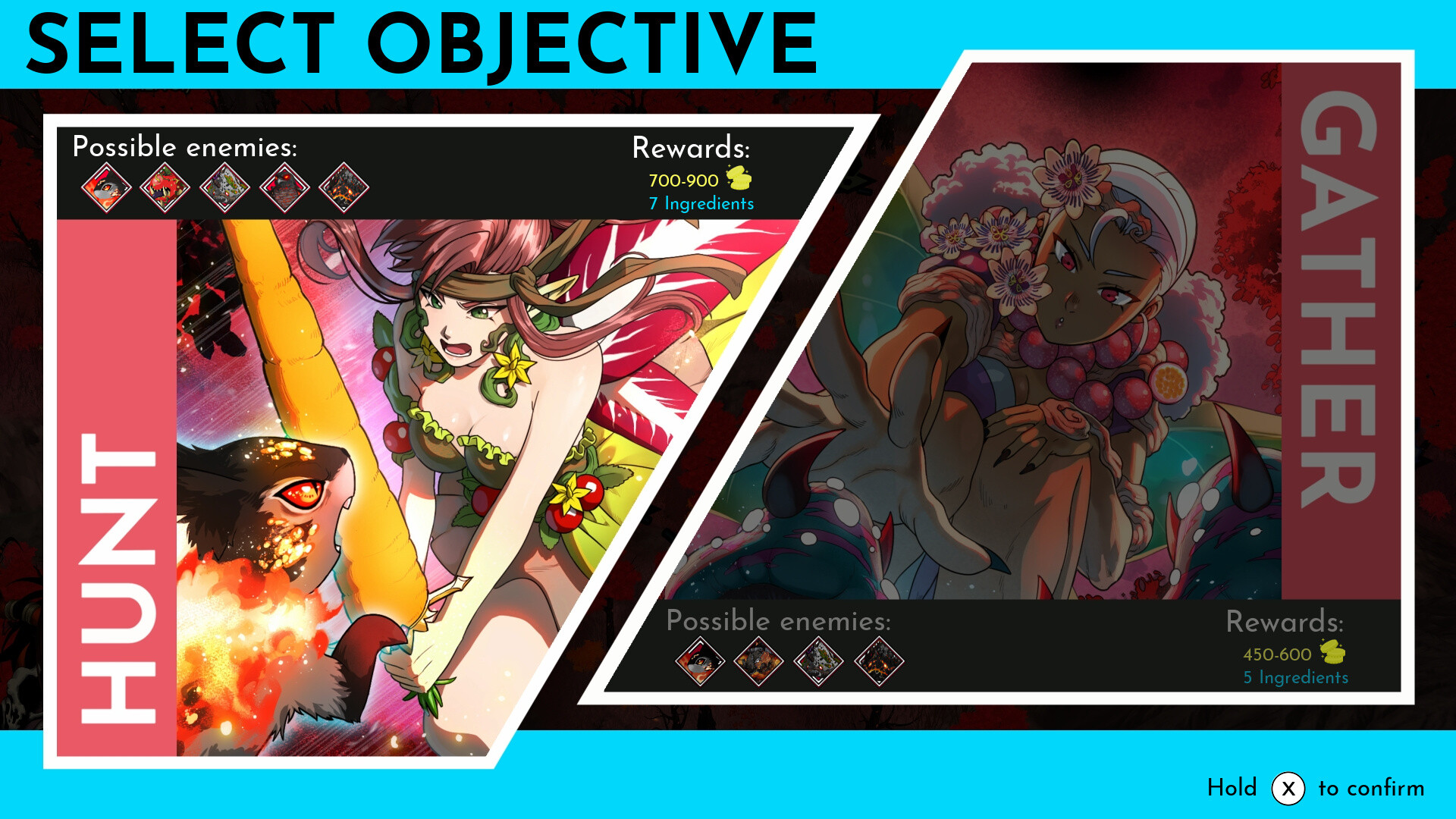
Official screenshot · Source: Steam store
The available reference is a single promotional video, not a hands-on review or a complete gameplay manual. That distinction matters. It introduces a chef, recruitable human adventurers, competing devils, and a restaurant-centered premise, but it does not establish detailed combat rules, progression systems, or release information.
Think of this as a practical preview guide: what the concept supports, what remains uncertain, and what to check before committing your time or money.
What Is Food Devils, and Is It Like Monster Hunter?
Food Devils is presented in its strategy-RPG, roguelite, and base-building reveal video as a game about humanity surviving an overturned food chain. According to the story setup, human mistreatment of nature provoked divine punishment. Centuries later, humanity has lost its former dominance.
Your chef represents a possible way forward. Cooking monstrous ingredients, recovering old recipes, attracting adventurers, and establishing a restaurant all feature in the pitch.
For anyone arriving through Food Devils monster hunter searches, the important distinction is between monster hunting as an activity and Monster Hunter as a specific franchise. The supplied material does not establish any connection between Food Devils and Capcom’s official Monster Hunter series.
What the trailer establishes
| Element | What the material supports | What it does not establish |
|---|---|---|
| Genre | A strategy-RPG, roguelite, and base-building combination | Exact combat pacing or run structure |
| Player role | A chef central to founding a restaurant | Character customization or playable classes |
| Adventurers | Food attracts humans who can join the cause | Recruitment costs, limits, or rarity tiers |
| Devil contracts | Contracts grant power and reflect different devil outlooks | Specific bonuses, penalties, or skill trees |
| Ingredients | Monsters and tainted food sources are part of the premise | Drop rates, gathering rules, or purification procedures |
| Restaurant | Ingredients, staff, and clientele matter to the setup | Construction menus, pricing tools, or automation |
The comparison is useful at the level of fantasy: dangerous creatures can become valuable resources. It becomes less reliable if you expect particular weapon systems, cooperative quests, equipment crafting, or action-combat mechanics.
Those features require separate confirmation. A shared interest in monsters and meals is not enough to establish equivalent gameplay.
How Hunting, Cooking, and the Restaurant Fit Together
The strongest idea in the reveal is the relationship between food and human survival. Cooking is not presented merely as a side activity. It gives your chef a reason to gather ingredients, attract people, and connect the restaurant to expeditions into a dangerous world.
A useful reading of the pitch is:
- Dangerous creatures and contaminated ingredients create a resource problem.
- The chef can turn unusual ingredients into appealing food.
- That food draws human adventurers to the restaurant.
- Devils offer contracts that can empower those humans.
- Empowered adventurers can help obtain more food.
This is a conceptual loop inferred from the dialogue, not a confirmed sequence of menus or mission objectives. The distinction keeps the Food Devils monster hunter premise interesting without turning promotional dialogue into an invented walkthrough.
The likely connections—and the questions behind them
| Part of the premise | Why it matters | What to look for in gameplay footage |
|---|---|---|
| Obtaining ingredients | Connects danger with restaurant supplies | Whether gathering happens through battles, exploration, or assignments |
| Cleansing tainted food | Links cooking to the damaged environment | Whether cleansing is a mechanic, story element, or both |
| Recreating ancient recipes | Gives the chef a recovery-focused goal | How recipes are discovered and what they change |
| Attracting adventurers | Connects food with recruitment | Whether particular meals attract particular recruits |
| Signing contracts | Makes devils relevant to human capability | Whether contracts have costs, restrictions, or lasting effects |
| Establishing the restaurant | Provides a home-base objective | What players can build, upgrade, and manage |
One practical takeaway is to evaluate the connections, not just the individual features. A restaurant, a combat system, and a recruitment screen can coexist without meaningfully influencing one another.
For example, future footage showing a dish attract a new adventurer would demonstrate a stronger connection than separate clips of cooking and fighting. Likewise, a contract visibly changing an adventurer’s options would explain more than a general promise of supernatural power.
What not to assume about meals
The chef’s food is described as a way to attract adventurers, but the reference does not provide meal statistics. It does not confirm healing values, temporary buffs, recipe quality tiers, or ingredient rarity.
If you are looking for the “best early recipe,” there is no defensible ranking in this material. A useful recipe guide would need actual requirements, effects, availability, and trade-offs—not simply an appealing dish name.
Devil Contracts: What the Different Attitudes Suggest
The devils are more than interchangeable power sources in the reveal. Their dialogue expresses conflicting ideas about how humans should live, fight, and relate to food.
Some favor direct force. Another objects to encouraging violence and emphasizes individual fulfillment. Another connects food and physical strength. A further character focuses on cleansing fish affected by plastic pollution.
These contrasts suggest thematic variety, but they do not prove a formal faction system or mutually exclusive progression paths.
For a Food Devils monster hunter beginner, the safest approach is to treat each devil’s pitch as a clue about identity—not as a verified build recommendation.
| Attitude expressed in the trailer | Supported interpretation | Unsupported leap to avoid |
|---|---|---|
| Empower humans to gather food through force | One devil favors an aggressive solution | Claiming a confirmed damage bonus |
| Reject cruelty and support individual happiness | Another offers a contrasting philosophy | Claiming a fully nonviolent campaign |
| Associate cooking with physical power | Strength is part of one contract pitch | Inventing health or attack multipliers |
| Cleanse plastic-tainted fish | Environmental restoration motivates one character | Assuming a dedicated fishing class or cleanup minigame |
How to assess contracts when details become available
Before selecting a contract in a playable build, check the actual description for five things:
- Benefit: What action, attribute, or resource does it change?
- Cost: Does it consume currency, ingredients, time, or another resource?
- Scope: Does it affect one adventurer, several characters, or the restaurant?
- Restrictions: Does accepting it prevent another choice?
- Reversibility: Can you change your decision later?
These are evaluation questions, not confirmed contract mechanics. They are useful because colorful character dialogue can make an option sound powerful without explaining its practical consequences.
Avoid selecting purely on personality if a contract has mechanical trade-offs. Conversely, do not assume that the most combative devil is automatically the strongest choice. Without encounter rules and contract descriptions, that conclusion would be guesswork.
A Practical Checklist Before You Play or Buy
The Food Devils monster hunter pitch combines several appealing ideas, but each genre label creates a different expectation. Strategy-RPG players may care about positioning and character roles. Roguelite players may prioritize run variety and progression after failure. Base-building fans may want meaningful construction and management decisions.
The reveal’s title names all three genres, yet the transcript does not explain their depth.
Use the following checklist to turn broad interest into specific research.
| Your priority | Evidence worth finding | Why it matters |
|---|---|---|
| Tactical combat | A continuous encounter with visible player decisions | Reveals how strategy works beyond the genre label |
| Roguelite replayability | An explanation of failure, resets, and retained progress | Shows what repeated attempts actually involve |
| Restaurant management | Footage of staffing, preparation, and customer interactions | Clarifies whether the restaurant is hands-on or mostly narrative |
| Base building | Visible construction or upgrade decisions | Establishes what players can change at the home base |
| Recruitment | A demonstrated adventurer joining process | Tests how food connects to roster growth |
| Release and platform details | A current developer announcement or verified storefront listing | Avoids relying on an undated promotional pitch |
Watch for complete decisions, not just feature lists
A useful gameplay demonstration should show a problem, the player’s options, and the result of a choice.
For example, footage might establish whether preparing one meal rather than another changes recruitment. It might show whether a contract alters available actions. Those examples would reveal actual systems; the current reference does not confirm either interaction.
When evaluating Food Devils monster hunter coverage elsewhere, distinguish among three kinds of information:
- Trailer-supported information: Directly shown or stated in promotional material.
- Developer explanations: More detailed claims that should be checked against their publication date and context.
- Player experience or community reports: Useful observations that may depend on a specific build, update, or individual interpretation.
No player experience or community reports are included in the supplied reference. Accordingly, there is no verified basis here for claims about difficulty spikes, optimal teams, grinding, performance, or endgame balance.
Who should keep watching?
Food Devils is worth following if the combination matters more to you than any one feature: a chef helping humans survive, dangerous ingredients becoming meals, and a restaurant serving as the center of a broader struggle.
Be more cautious if your interest depends on precise action combat, multiplayer hunting, elaborate restaurant simulation, or a particular roguelite progression model. Those expectations need direct evidence.
The best next step is straightforward: look for a current gameplay demonstration that follows an expedition or management sequence from beginning to end. That will answer more than another montage of monsters and dishes.
FAQ: Food Devils Monster Hunter Questions
Is Food Devils part of the Monster Hunter franchise?
The supplied reference does not establish a connection to Capcom’s franchise. Food Devils monster hunter is best understood here as a search phrase describing interest in its creature-hunting and cooking premise, not an official series designation.
What does the chef do in Food Devils?
The chef is central to the restaurant setup. The trailer presents cooking as a way to use monstrous ingredients and attract human adventurers. Recovering ancient recipes and dealing with tainted ingredients are also part of the premise, although their exact gameplay implementation is not explained.
Are there confirmed best contracts or beginner builds?
No. The available material introduces devil contracts and contrasting personalities, but it does not provide enough mechanical detail to rank them. Reliable build advice would require contract effects, costs, combat rules, and evidence from a playable version.
Does the trailer confirm a release date or supported platforms?
Not in the supplied transcript. Check a current developer announcement or verified storefront listing for availability. The material supports a preview of the concept, not a release calendar or purchasing recommendation.
Related Guides
Food Devils base builder: Restaurant Strategy Guide
Learn how Food Devils' restaurant, furniture, cooking, recruitment, and relationships support stronger parties and smarter roguelite expeditions.
Food Devils fight by day: Combat & Cooking Guide
Master Food Devils' combat and restaurant loop with tips for calories, mission objectives, skill builds, cooking, and demo progression.
Food Devils gameplay: Combat and Restaurant Guide
Learn Food Devils gameplay basics, from tactical combat and Devil Contracts to cooking buffs, restaurant recruitment, and smarter expedition planning.
Food Devils romance: Characters and Relationship Guide
Explore Food Devils romance options, character personalities, relationship progression, and what remains unconfirmed before Early Access.
Food Devils demo gameplay: Combat and Cooking Guide
Explore Food Devils demo gameplay, tactical combat, cooking buffs, playable Devils, save transfers, and tips for the 5–6-hour Steam prologue.