Food Devils Rating: Early Access Score Guide
No user reviews yet. Learn what will shape the Food Devils rating at Early Access and how to score the demo yourself.
Where the Food Devils Rating Stands Today
Searching for a Food Devils rating before November 3, 2026 runs into a simple fact: Steam still lists no user reviews. That gap matters if you are deciding whether to jump into Early Access or wait for a stable score. This Food Devils rating guide explains what is public right now, which systems will move the eventual score, and how to judge the demo yourself.
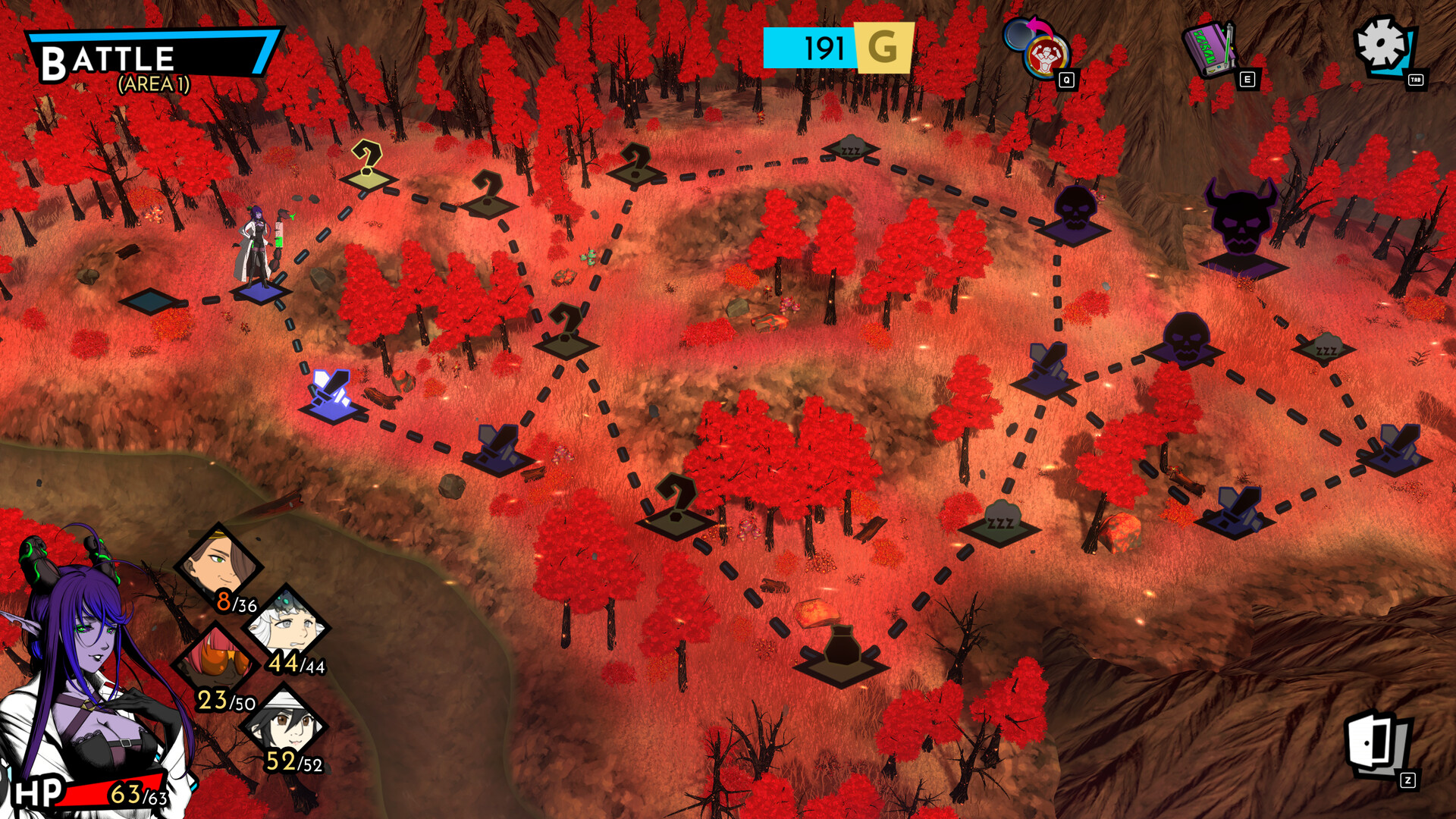
Official screenshot · Source: Steam store
Studio Daimon develops and publishes the game. You play the last chef in a ruined world, cook monster ingredients, draw adventurers into a restaurant, and send them out for more supplies. Early Access is planned for November 3, 2026. On October 31 the store page still said the build was locked and due to unlock in about three days.
| Signal | Status on Oct 31, 2026 | What it means for shoppers |
|---|---|---|
| Steam user reviews | None listed | There is no percentage score to trust yet |
| Curator write-ups | Six curators have reviewed it | Notes exist, but they are not a user aggregate |
| Release state | Early Access on Nov 3, 2026 | A launch score is a version score, not a 1.0 verdict |
| Demo | Free prologue, about 5–6 hours | The best evidence you can gather before paying |
| Steam Deck | Compatibility unknown | Do not assume a Verified badge |
Until launch-day posts appear, any Food Devils rating on social feeds is a reaction to the trailer, the demo, or the pitch. Treat those takes as previews. The Food Devils page on Steam is the place to confirm review count, languages, and the unlock date, because those fields change quickly around launch.
A larger demo went up for Steam Next Fest on October 19, 2026. Studio Daimon said players can spend about five to six hours in prologue content with Hunter and Poison, then carry that progress into Early Access. That carryover is one of the few concrete reasons to play now instead of waiting for strangers to post a number.
What a Fair Score Has to Measure
A fair Food Devils rating has to cover more than a genre tag. The store pitch mixes tactical RPG planning with roguelike replay. In an October 2026 interview, Alfred Kamon said the seed was simpler: Fire Emblem-style decisions plus the improvisation he wanted from roguelikes after discovering that genre around 2019. The restaurant, the cooking, and the Devils grew around that core until the idea stopped being simple.
The fiction is specific. Centuries before the story starts, gods punish humanity for abusing nature. The food chain flips: animals become monsters, civilization collapses, and humans become prey. You reopen a restaurant and hunt those monsters for ingredients. The Devils embody Appetites, ideas such as Hunger and Connection, so the plot also touches consumption, progress, and what people cling to as society fails. If one of those layers is only decoration, the score should drop.
| Pillar | What you actually do | Why it belongs in the score |
|---|---|---|
| Grid tactics | Plan turns on tricky maps in four biomes | This is the moment-to-moment game |
| Run structure | Build a party, improvise, then start again | Replay value lives or dies here |
| Kitchen and dining room | Cook loot, furnish the room, attract guests | Meta progression between expeditions |
| Devil Contracts | Bond adventurers to demons for skills and mobility | This is where builds get an identity |
| Story and romance | Persistent cast, voiced scenes, optional bonds | Separates it from a pure score-attack run |
Each expedition starts with one Food Devil and up to four human adventurers who stopped at the restaurant. Classes named on the store page include Warrior, Shielder, Mage, and Healer. Contracts boost skills and movement. Looks and stats are randomized, so two Warriors are not clones. There are five Devils. You can romance any of them, or pair Devils with each other, if that is the story you want.
Kamon's case for standing apart from other roguelites is that planning stays deliberate while you still have to improvise, and the RPG side does not reset. A persistent cast, romance, and voiced dialogue continue between expeditions. If that promise holds, story-first players and tactics players can share the game. If the plot stalls while fights repeat, those two groups will post very different scores.
How to Build Your Own Early Access Score
Do not wait for a single public number to think for you. Write down the version you played and score it with weights. Early Access moves, and a week-one percentage can be wrong after the first balance patch.
Studio Daimon has framed the launch as the start of the next development phase. More story, Devils, areas, and enemies are planned on the way to version 1.0, plus balance and quality-of-life fixes. A larger content update is aimed at roughly six months after Early Access, and a fuller roadmap is expected around launch. New modes are not promised until players show what they want. That is a responsible plan, and it also means a launch score is provisional.
| Category | Suggested weight | What "good" looks like early | Common failure |
|---|---|---|---|
| Tactical combat | 30% | Turns have real tradeoffs and fair losses | One strategy solves every map |
| Run variety | 20% | Builds and objectives change the plan | Same route, new coat of paint |
| Onboarding | 15% | Tooltips keep pace with the systems | Hidden rules or text overload |
| Meta loop | 15% | Cooking changes the next expedition | Busywork between fights |
| Characters and tone | 10% | Cast and themes outlast the joke premise | Romance feels bolted on |
| Performance and access | 10% | Stable frame rate, readable UI, working inputs | Tooltip, controller, or Deck issues |
Add the weighted results, then label the total as a personal Early Access score with the date. That is more honest than pretending a public Food Devils rating already exists.
A few habits keep the math useful:
- Play the prologue before you buy if the demo is still up. Five or six hours is enough to see whether grid combat and the restaurant both click.
- Score combat and story separately, then combine them. The studio spent years tuning for hardcore run-based players and for people who mainly want characters. They will not land on the same number.
- Revisit the score after the first major patch. Demo feedback already changed tutorials, balance, and UI, and Kamon expects thousands of players to find interactions the team missed.
- Note the difficulty settings. Adjustable difficulty is listed, which matters if you want the story without a harsh failure spiral.
Kamon has been blunt about tone. The game is often silly on purpose: flirtatious demons, monster cuisine, jokes. Under that, the team says tactics, characters, and themes are serious. English voice acting is fully professional, and the art is an elaborate seinen manga look with thick shadows, after about three months spent on character design alone. When you rate presentation, separate "this premise is ridiculous" from "the scenes, UI, or turns are sloppy." The first can be a feature. The second is a defect.
Systems That Will Move the Score
Variety is the make-or-break system. Several layers are supposed to keep a run from feeling copied.
Adventurers differ in stats, traits, personalities, and appearance. Devil Contracts change skills and roles. During an expedition you can find temporary skills, choose Master Rules that alter how you generate Calories for your Devil, and face objectives such as Hunt, Defend, Gather, or Escape. The maps themselves are handcrafted, but which map, enemies, and setup you meet are drawn from larger pools. The aim is authored tactical situations without one memorized solution. Cooking and restaurant choices then affect the next trip. Kamon has said he sometimes cannot immediately parse a player's build. That is a good sign for depth and a warning for clarity.
| Variation layer | Player-facing effect | Question to ask in a review |
|---|---|---|
| Adventurer traits | Different stats, personalities, and looks | Do traits change decisions, or only flavor text? |
| Devil Contracts | New skills, roles, and mobility | Can a contract change a plan, or only add damage? |
| Master Rules | Change how you generate Calories | Is the rule a build choice or a tax? |
| Objectives | Hunt, Defend, Gather, or Escape | Does the goal change positioning? |
| Map and enemy pools | Handcrafted maps, mixed encounters | Can you still form a plan, or only react? |
| Kitchen meta | Recipes and decor feed the next run | Does the restaurant help, or just delay the fight? |
Skill count is the other pressure point. The project includes more than 250 skills. That can support the store claim that no two runs play the same. It can also bury players in text. Kamon called tooltips the piece the team reworked most: they had to be responsive, adaptive, and fast, because players would open them constantly. If you are writing a Food Devils rating after a weekend with the game, spend a paragraph on whether a new skill is understandable mid-turn. That note will age better than a vague compliment about depth.
Enemy design shows the intended mix of gross, funny, and readable. Concepts need food you can recognize, a strong silhouette, and a gameplay idea, and they have to work in Spine2D. A lot of ideas were discarded before a monster became "a sandwich with legs." Kamon's favorite is Piggharta, the Ascended Swine: a psychic pig with a saintly aura that levitates over a rice bowl. The irony is deliberate. In a world where the gods reversed the food chain, a pig, far from enlightenment, gets the holy treatment. In a review, ask whether later biomes keep that readability. Four biomes are promised, each with its own monsters and loot. If silhouettes blur, the tactics suffer even when the jokes stay sharp.
Store tags lean anime, dark fantasy, romance, party-based RPG, turn-based tactics, and story-rich. Those tags match the pitch. They also set expectations. A pure strategy player may bounce off the cast. A romance-first player may bounce off the grid. Kamon expects some unhappy players anyway, and says the team stays responsive to feedback. Read a few reviews from each camp before you let one percentage decide a purchase.
Specs, Languages, and a Buy-or-Wait Checklist
Published PC requirements are modest, which helps the access side of a score if frame rate and UI hold up.
| Spec | Minimum | Recommended |
|---|---|---|
| OS | Windows 10 64-bit or higher | Windows 10 64-bit or higher |
| CPU | Dual-core 2.4 GHz | Dual-core 3.0 GHz or higher |
| Memory | 6 GB RAM | 8 GB RAM |
| Graphics | 1 GB VRAM | 2 GB VRAM |
| DirectX | Version 10 | Version 10 |
| Storage | 8 GB free | 15 GB free |
The published requirements are Windows-only. Leave the recommended 15 GB free if you can, because that footprint is nearly double the minimum. Listed inputs include keyboard-only play, Xbox controllers, and DualShock or DualSense controllers over USB. Wireless PlayStation support is not claimed, so USB is the safe assumption. Other store features are single-player, Steam achievements, and Family Sharing.
Language support belongs in any international Food Devils rating. English has interface, full audio, and subtitles. Italian, Japanese, Simplified Chinese, Brazilian Portuguese, and Russian have interface and subtitles, not full audio. If voiced performances are why you buy story games, confirm you are fine playing them in English.
Accessibility notes currently include adjustable difficulty, camera comfort, custom volume, stereo sound, no required quick-time events, and a keyboard-only option. That is a solid baseline for a tactics game. It is not a full options review. Text scale, colorblind filters, and turn timers are not spelled out in the public list, so test those yourself once the build is unlocked.
Use this checklist before you spend money:
- Finish enough of the demo to see one full loop: hunt, cook, hire, and head out again. Progress is supposed to carry into Early Access, so the time is not wasted.
- Open a combat tooltip during a real turn. With more than 250 skills, slow or vague text will hurt more than a thin story beat.
- Check whether a restaurant upgrade changes the next party in a way you can explain. If you cannot tell what the kitchen did, do not score the meta loop highly yet.
- If you play on Steam Deck, wait for a compatibility update or a hands-on report. The badge is still Unknown.
- If you want a finished campaign and extra modes, waiting is reasonable. New modes are not promised, and the bigger content drop is penciled in for about six months after launch.
- If you like party tactics, strange builds, and a persistent cast, Early Access matches how this studio likes to work. Kamon has described 14 years of releasing work, watching people play, and revising. That process fits Early Access. It does not guarantee you will like this build.
The long-term Food Devils rating will depend less on the joke premise and more on whether decisions stay sharp after the tenth expedition. Public materials make a credible case: handcrafted maps, mixed objectives, a cast that persists, and a kitchen that is supposed to change the next fight. They do not prove it. No user score exists yet, six curator notes are not a consensus, and the build you rate this week will not be the last one.
FAQ
Is there an official Food Devils rating yet?
No. As of October 31, 2026, Steam shows no user reviews. Six curators have written about the product, but that is not a user-review percentage. Early Access is scheduled for November 3, 2026, so aggregated player scores should appear only after people can play the paid build.
Should the demo affect how I score the game?
Yes. The current demo is described as roughly five to six hours of prologue with Hunter and Poison, and progress is meant to carry into Early Access. A Food Devils rating based only on the trailer misses combat clarity, tooltip speed, and the restaurant loop.
How is Food Devils different from a standard roguelite?
The studio is trying to keep tactical RPG planning instead of replacing it with reflex play, while still mixing adventurers, contracts, objectives, and map pools. There is also a persistent story, romance with five Devils, professional English voice acting, and a restaurant that prepares the next expedition. Those layers are the difference only if they stay connected in play.
Will Early Access updates change a launch score?
Expect them to. Studio Daimon plans more story, Devils, areas, and enemies before 1.0, with a larger update roughly six months after release and a roadmap around launch. Date your score, note the version, and read patch notes before you treat an early percentage as final.
Related Guides
Food Devils reddit: Threads, Demo, and Review Guide
Explore Food Devils Reddit threads, verified gameplay details, demo content, and what to check before its November 3 Early Access launch.
Food Devils review: Demo Verdict Ahead of EA
Food Devils review of the Steam demo: tactics, cooking, Devil contracts, and whether Nov. 3, 2026 Early Access earns a wishlist.
Food Devils base builder: Restaurant Strategy Guide
Learn how Food Devils' restaurant, furniture, cooking, recruitment, and relationships support stronger parties and smarter roguelite expeditions.
Food Devils romance: Characters and Relationship Guide
Explore Food Devils romance options, character personalities, relationship progression, and what remains unconfirmed before Early Access.
Food Devils demo gameplay: Combat and Cooking Guide
Explore Food Devils demo gameplay, tactical combat, cooking buffs, playable Devils, save transfers, and tips for the 5–6-hour Steam prologue.